Toward Realistic Mobility: Spatial Channel Consistency Added to ns-3
Channel consistency for 3GPP ns-3 channel model
Wireless network simulation is only as meaningful as the realism of the channel model. As mobile nodes move - whether for pedestrian devices, vehicles, or drones - the channel between transmitter and receiver evolves continuously: multipath clusters shift, angles and delays change gradually, line-of-sight can break, shadowing varies. A model that “jumps” randomly at each update does not reflect reality and can mislead evaluations of beamforming, handover, and MIMO behavior. That’s where spatial consistency comes in. Without spatial consistency, simulations may overestimate channel fluctuations or misrepresent handover / beam-tracking performance, yielding results that are not representative of real deployments.
In our recent work on ns-3: the merge request MR2490— “Channel consistency feature for 3GPP channel model” - we introduce full support for spatially consistent channel updates for the 3GPP channel model. To do so we follow TR 38.901 Section 7.6.3 Procedure A. This MR revives and upgrades a previous attempt (MR !845) to add spatial consistency to ns-3, bringing it up to date with current ns-3-dev, aligning it fully with the TR 38.901 channel consistency procedure (for which various changes and parameters correlation functions were added or updated, e.g., correlated per cluster shadowing), and refactoring the code with the aim of simplifying it, including reduction of function lengths, avoid code duplications, etc. For example, the functions for the channel generation and the channel update had a lot of overlap and were very lengthy. Their code has been split into more than 15 new functions. We added a new test that verifies that with consistent updates, the channel evolves smoothly (e.g., shadowing, multipath) rather than jumping to completely new independent realizations. Soon we will add an additional detailed and visual example that allows more deep study of the channel consistence.
Through this MR, users of ns-3 who simulate mobile nodes with the 3GPP channel model will now be able to rely on realistic, spatially correlated channel evolution — out-of-the-box. This brings realism in mobile scenarios in which now the ns-3 simulator emulates what is in real networks: while users move, multipath clusters evolve gradually as the geometry changes; Channel parameters, such as, large-scale fading - pathloss, shadowing; small-scale fading - clusters, rays, angles, remain correlated while the device is moving, and only gradually change as nodes move farther. Hence, this is fundamental to achieve realistic mobile simulation of 5G and future wireless systems. With channel consistency feature in ns-3, when a node moves, channel consistent ns-3 3GPP channel does not regenerate the full channel randomly; rather it updates the channel parameters in a correlated way — preserving cluster continuity and smooth evolution of fading, shadowing, and geometry-based parameters. (I.e., clusters don’t disappear/appear randomly, but evolve as the geometry moves.) The user can control the update period, which governs how often the channel is updated. This allows tuning according to node speed and simulation accuracy needs.
With spatial consistency for mobile scenarios:
- Simulations better approximate real-world mobility scenarios (pedestrian, vehicular, drones).
- Research and development of beamforming, beam management and mobility-related algorithms become more reliable.
- Studies on fading dynamics, channel aging, CSI feedback, mobility management become more meaningful.
SNR Results before and after MR2490
(The results are updated on 10th of December 2025: channel update time is adjusted to channel coherence time)
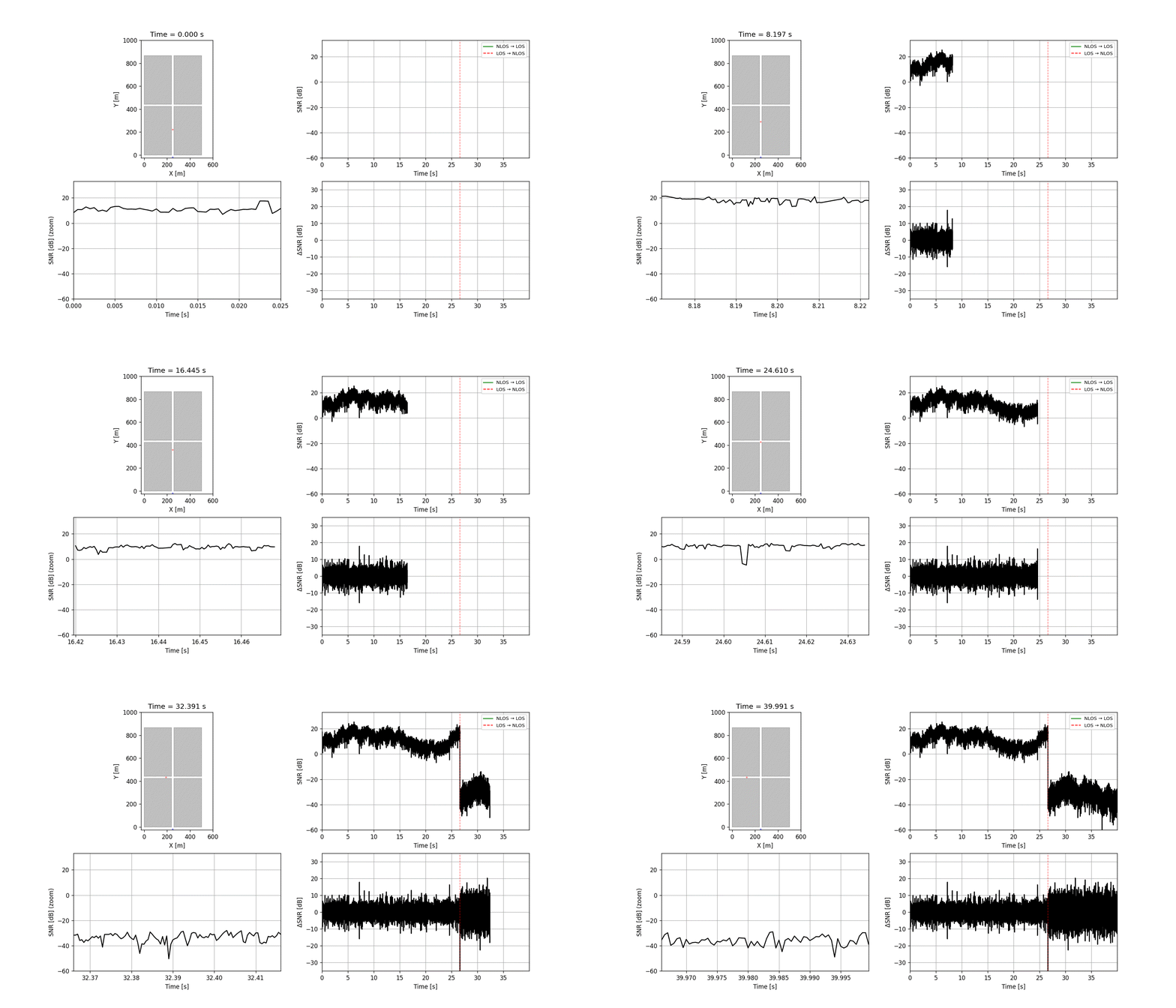
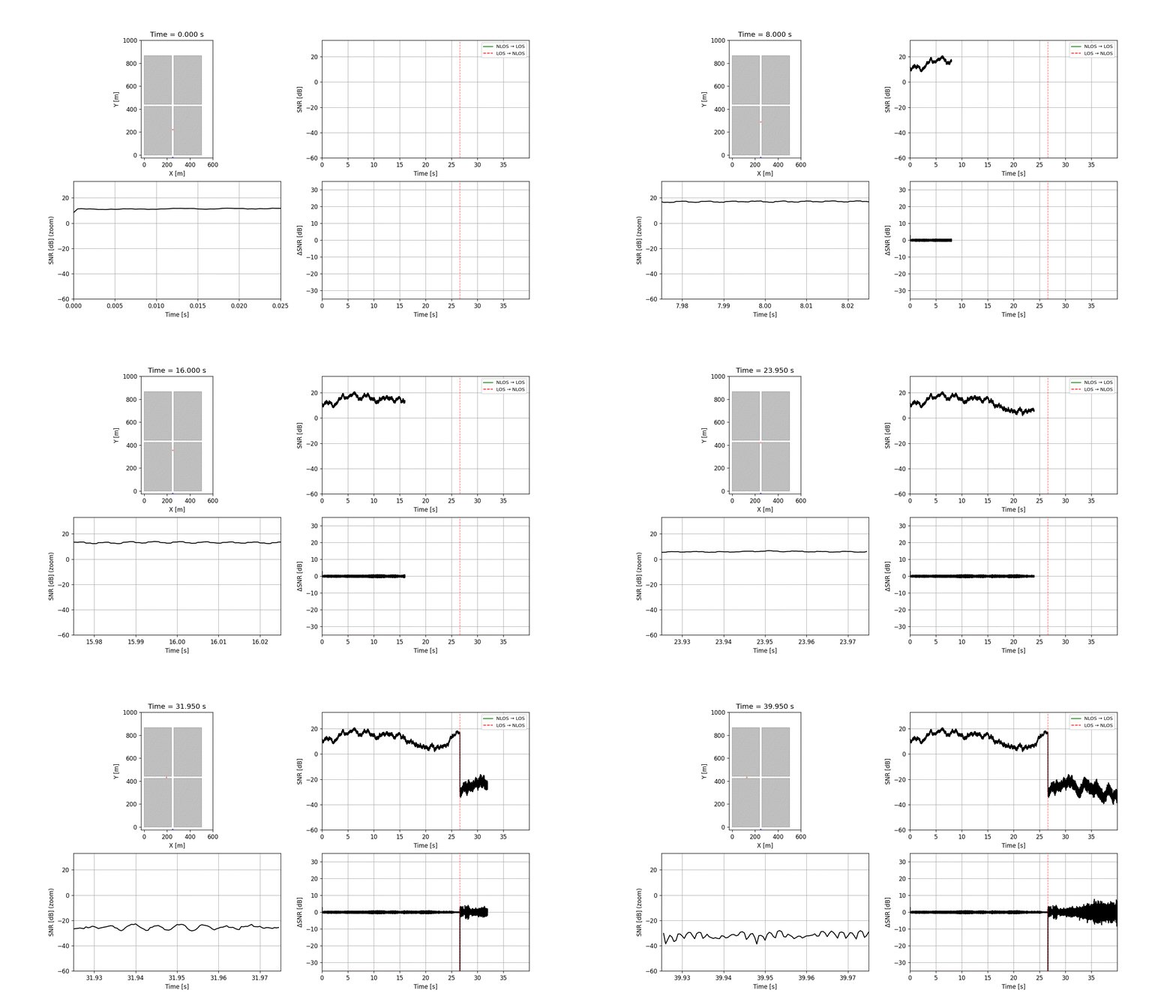
In the following results we compare the latest ns-3.46 that still does not have channel consistency feature and the channel consistency MR!2490. The scenario is urban street canyon with buildings. We use deterministic channel condition model, in which transitions from LOS->NLOS and vice versa are based on the obstacles like buildings in this case. The evaluated scenario setup is inspired by the 3GPP spatial channel consistency calibration parameters and metrics described in TR 38.901 (Table 7.8.5). The user is moving at 30km/h, the channel is UMi Street Canyon, the frequency is 30GHz, numerology 2. In the following figures we show the evolution of SNR before and after channel consistency feature (ns-3.46 vs MR!2490).
ns-3.46 results:
Channel consistency MR!2490:
Per-cluster results before and after MR2490
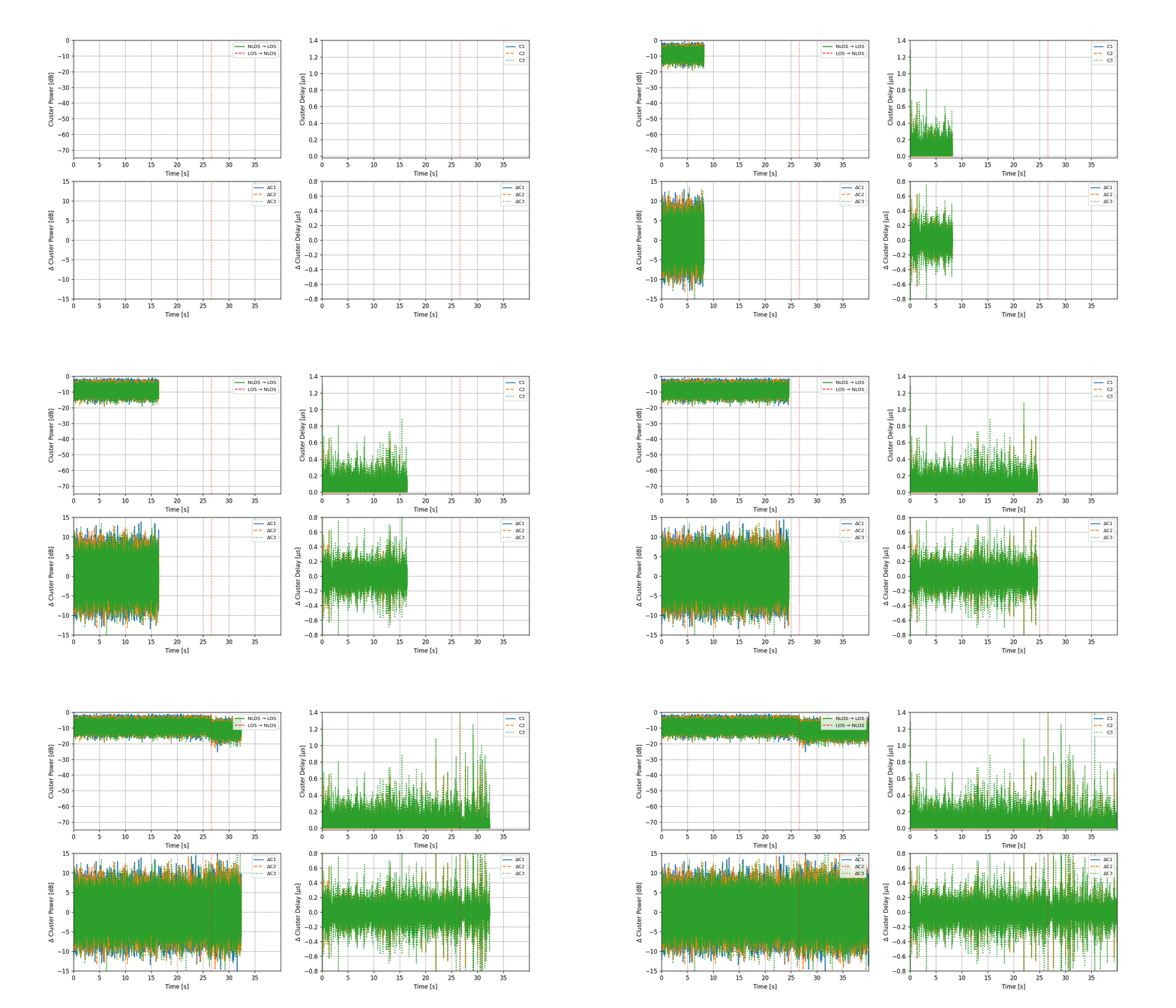
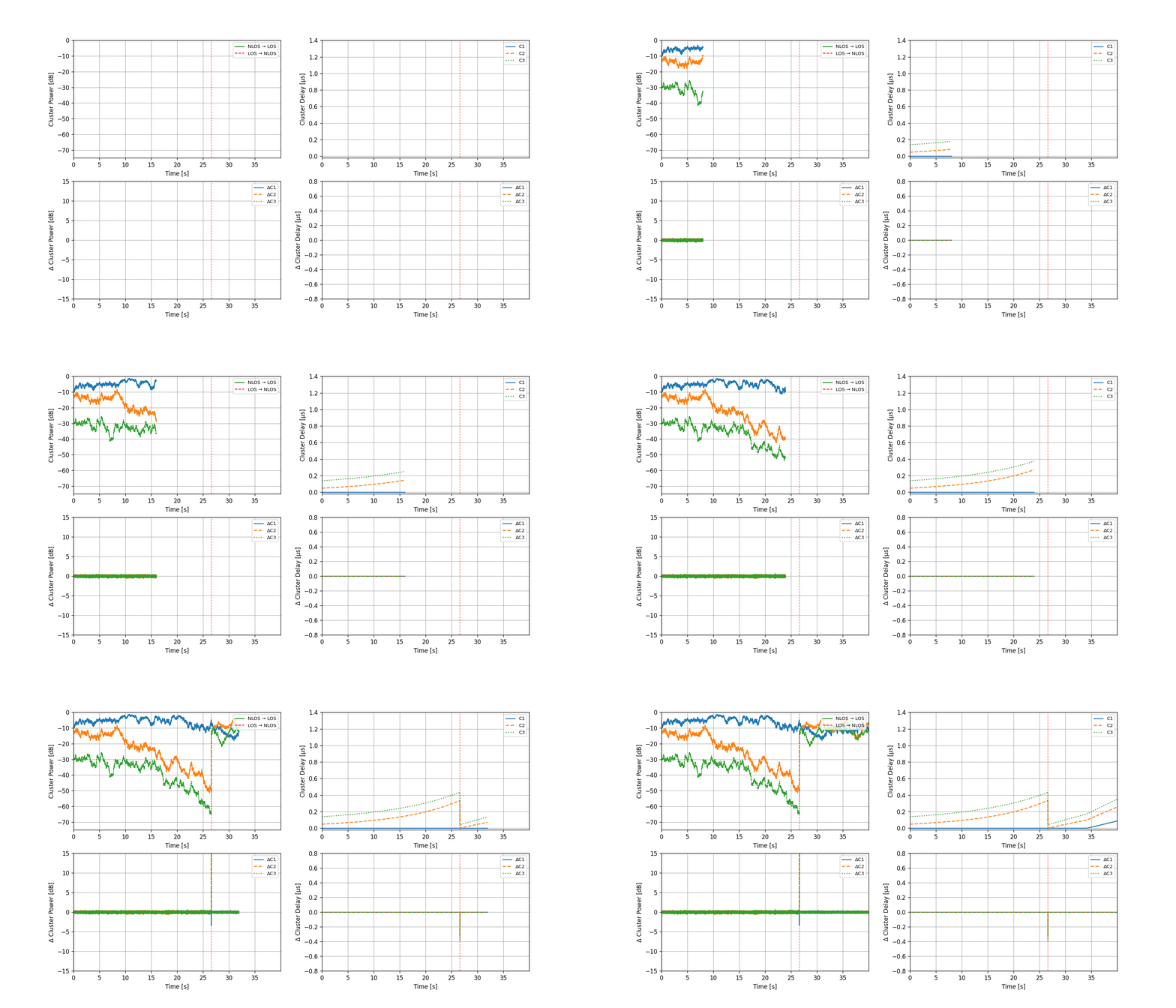
In the following we “zoom in” and select the 3 strongest clusters and show their evolution in time before and after the channel consistency feature (ns-3.46 vs MR!2490).
ns-3.46 results:
Channel consistency MR!2490:
We hope you enjoyed this blog post and the results, and we invite you to follow our 5G-LENA/ns-3 users group and ns-3 zulip channel. This MR and related reasearch is still ongoing so we might publish more results soon. Stay tuned!